

 English
 日本語
 русский
 简体中文

The company has been adhering to the corporate tenet of "quality first, customer first", and sincerely welcomes domestic and foreign customers to visit and guide.
GET A QUOTE
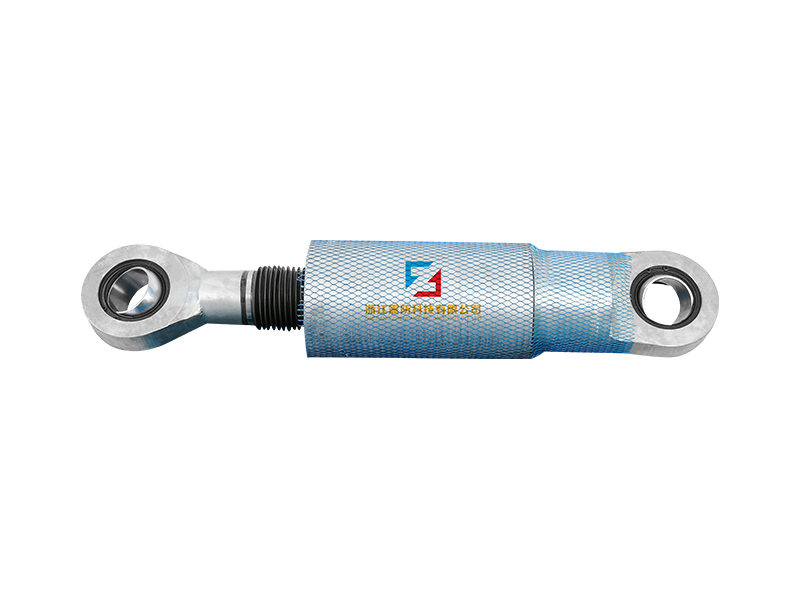
A search for a Viscous Friction Damper lands on two different devices that share one phrase. A fluid viscous damper pushes silicone oil through small orifices, and the force it produces depends on how fast the piston moves. A friction damper clamps steel plates together with bolts and slides at a set load, and the force it produces depends on the clamping and not on speed. Engineers choose a Viscous Friction Damper of one kind or the other by asking which quantity, velocity or slip load, suits the structure.
A fluid viscous damper follows F = C·vᵅ. The force F rises with velocity v, C is the damping coefficient and α is an exponent that is typically set between about 0.3 and 1. With α = 1 the damper is linear, and doubling the velocity doubles the force. With α = 0.5 the same doubling raises the force by only about 41 percent, because 2 to the power 0.5 is 1.41. That is why nonlinear Viscous Friction Dampers of the fluid type are specified where peak force needs a ceiling.
A friction damper, the other half of the Viscous Friction Damper search term, follows a different rule. The force is the friction coefficient times the clamping force on the interfaces, summed over the interfaces, and it stays about constant once sliding starts. Speed hardly enters.
The two also differ in stiffness. Before it slips, a friction damper adds stiffness to the frame and shortens its period, whereas a linear fluid damper adds almost none, since its force is zero at the turning point of the motion. A Viscous Friction Damper of either kind therefore changes the response of the structure in a different way, and the analysis model carries both effects.
|
Behaviour |
Fluid viscous damper |
Friction damper |
|
Force depends on |
Velocity |
Clamping force and friction coefficient |
|
Hysteresis loop |
Ellipse for a linear damper |
Close to a rectangle |
|
Below the activation point |
Acts at any movement |
Locked, adds stiffness |
|
Medium |
Silicone oil |
Steel plates and friction material |
The viscous force is out of phase with the displacement. If a floor moves as x = X sin ωt, its velocity follows cos ωt, so a linear damper delivers its largest force when the floor passes through the centre position and almost none at the turning point. The elastic force in the columns peaks at the turning point instead, so the two forces do not arrive together. This is the main reason a Fluid Viscous Damper can remove energy from a structure without adding its full peak force to the column forces at max drift.
A friction damper behaves the other way round. Its force is a plateau that reaches the slip load as soon as sliding begins and holds it across the stroke, so it caps the force the brace can deliver and the loop area is large for the displacement used.
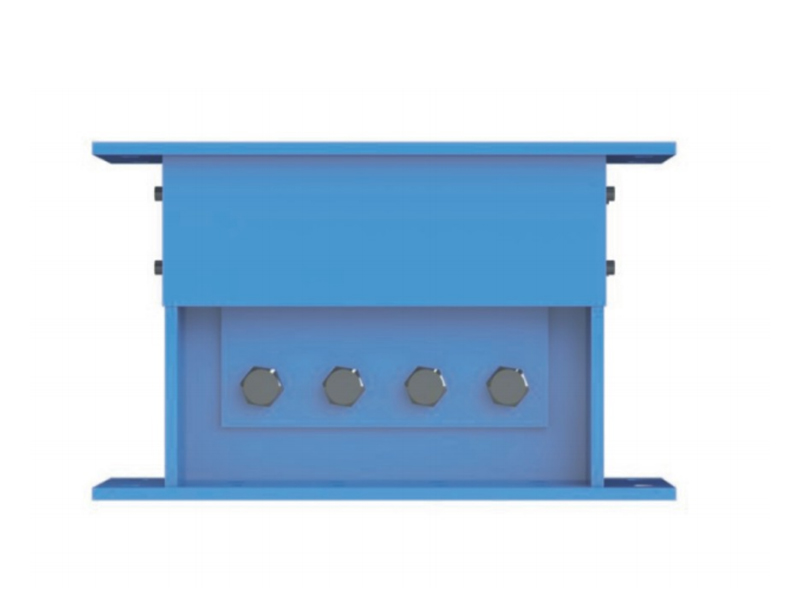
In a Viscous Friction Damper of the friction kind, the plates are clamped by high-strength bolts through slotted holes. The slip load is set large enough that the damper stays locked under wind and service loads, and it slips only when a larger earthquake pushes the brace beyond that value.
Because slip load equals friction coefficient times clamping force, two things are controlled together: the bolt preload and the friction material. A test on the friction material alone tells half of the story, so bolt torque is checked in the same test.
Specifying a Viscous Friction Damper by name leaves the type open, so a drawing states the device kind, the force law, the stroke and the max force.
A Fluid Viscous Damper suits structures where damping is wanted across a wide range of movement, including small ones, since it responds to velocity from the smallest movement. The silicone oil inside also changes viscosity less with temperature than many hydraulic oils, so the force stays closer to its design value across seasons.
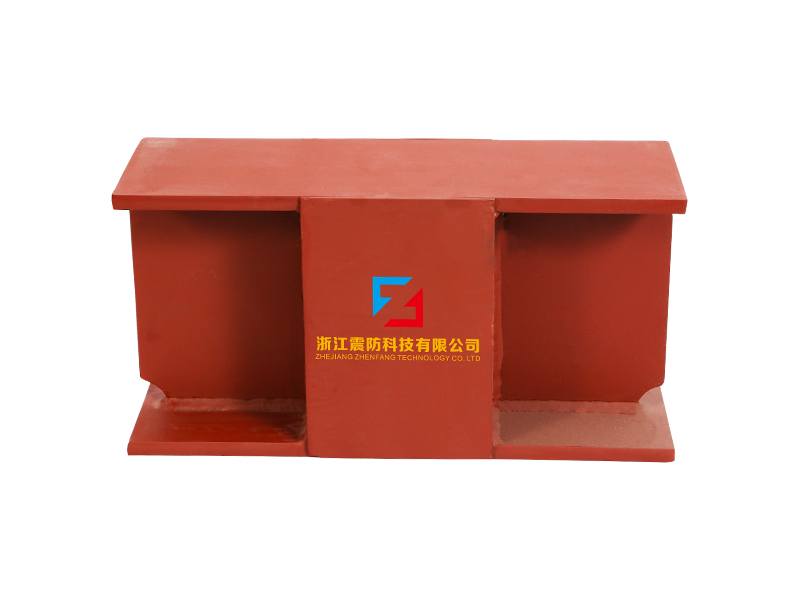
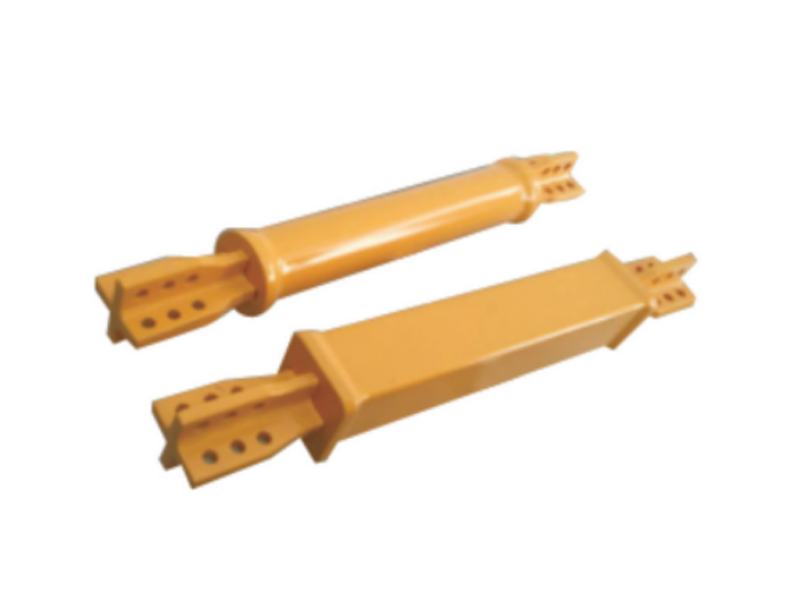
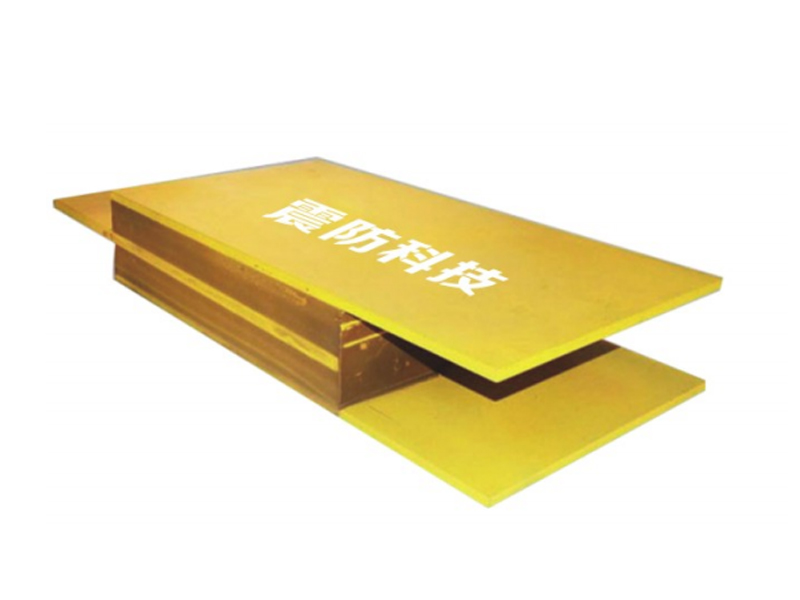
A friction device suits structures where a defined force limit and a high energy loss per cycle are wanted, and where the brace can stay silent under wind. Zhejiang Earthquake Prevention Technology makes both fluid viscous and friction dampers, together with the isolation bearings used alongside them.
Comparative studies on steel buildings treat the damping coefficient of the fluid device and the slip load of the friction device as the two design variables, and both kinds of Viscous Friction Damper brought acceleration and displacement down in the frames studied.

The company has been adhering to the corporate tenet of "quality first, customer first", and sincerely welcomes domestic and foreign customers to visit and guide.
GET A QUOTE
Add: No. 359 Guangming West Road, Sanmen County, Taizhou City, Zhejiang Province, China
International Trade Manager: Madison
Tel/Whatsapp:+86-17857335842
Copyright © Zhejiang Earthquake Prevention Technology Co., Ltd. All Rights Reserved.
