

 English
 日本語
日本語 русский
 简体中文
简体中文
The company has been adhering to the corporate tenet of "quality first, customer first", and sincerely welcomes domestic and foreign customers to visit and guide.
GET A QUOTE
Lead rubber bearing is usually installed in bridges and building isolation layers, but the actual installation environment is never as uniform as the design assumptions. On-site alignment tolerance, concrete surface condition, and even temperature during placement can slightly change how a lead rubber bearing settles after installation. This is often not highlighted in design documents, but it shows up during early inspection stages.
In some bridge projects, technicians may notice that one lead rubber bearing does not sit exactly at the same level as adjacent units. It does not always mean a problem, but it reflects construction variability. These small differences can influence initial stiffness distribution, although not always in a predictable way.
A lead rubber bearing also behaves differently depending on whether preload is evenly applied during installation. In practice, this step is sometimes less controlled than theoretical procedures describe.
When horizontal movement begins, the lead rubber bearing does not respond all at once across the structure. Some supporters engage earlier, others follow slightly later. This staggered response is commonly observed in irregular bridge layouts or where pier stiffness is not uniform.
The internal lead core in the lead rubber bearing starts yielding under shear deformation, but the yielding pattern is not identical in every cycle. In some tests, energy dissipation appears more stable; in others, the curve is slightly uneven. Engineers usually do not treat this as abnormal unless the deviation becomes too large.
Field engineers sometimes describe lead rubber bearing behavior as “smooth but not identical.” That description is not formal, but it reflects what is often seen during inspection after minor seismic events.
In longer span bridges, one lead rubber bearing may temporarily take more movement than others. This redistribution is linked more to global structure stiffness than the bearing itself.
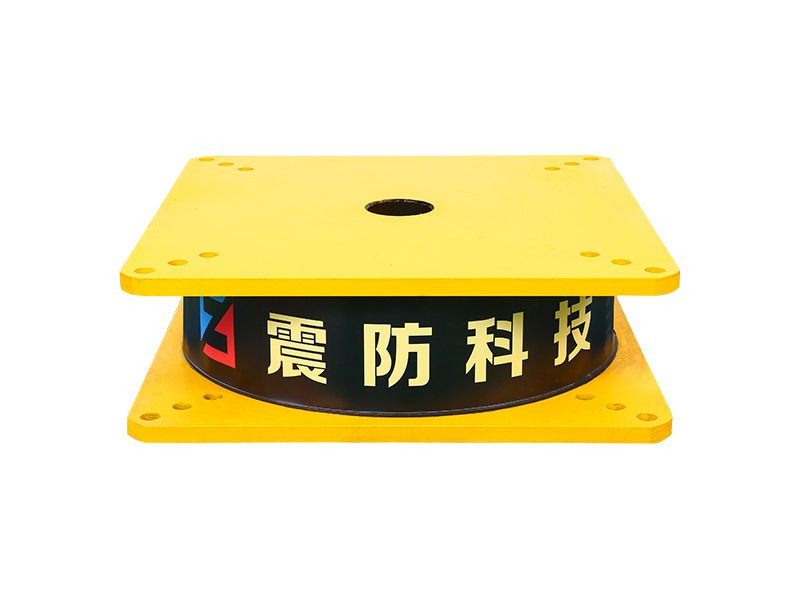
In real structures, lead rubber bearing does not operate in isolation. It interacts continuously with pier flexibility, deck rigidity, and foundation settlement conditions. Because of this, the overall system response is rarely symmetrical during seismic loading.
There are also cases where the lead rubber bearing performance changes slightly after the structure has been in service for a period of time. This is not necessarily degradation; sometimes it is just stabilization of material behavior under repeated small movements.
Temperature variation can also affect how the lead rubber bearing responds during low-level seismic activity. The effect is small, but measurable in some monitoring data, especially in regions with large day-night temperature differences.
In inspection reports, engineers sometimes note that lead rubber bearing displacement is not evenly distributed across all supports. This is usually accepted as part of system behavior rather than a defect condition.
Over time, the lead rubber bearing may show slight changes in stiffness response. This is often gradual and difficult to detect in short-term testing. It becomes more visible when comparing early commissioning data with later inspection results.
Another point observed in practice is that lead rubber bearing behavior under small seismic events does not always scale linearly to larger event predictions. This mismatch is usually handled through conservative design margins rather than exact matching.
In multi-support bridge systems, lead rubber bearing units work together, but load sharing is not equally suitable at every moment. Some units take more demand temporarily, then redistribute as motion stabilizes.
This kind of behavior is generally expected in real engineering conditions and is one reason why system-level evaluation is more important than single-unit evaluation.
From field experience, the lead rubber bearing performs within the expected isolation function, but the response is not suitable for all conditions. Slight variation between units, installation differences, and time-dependent changes all contribute to real-world behavior.
In many cases, engineers focus on the overall structural response rather than trying to interpret each lead rubber bearing individually. That approach aligns better with how seismic isolation systems actually behave in practice.
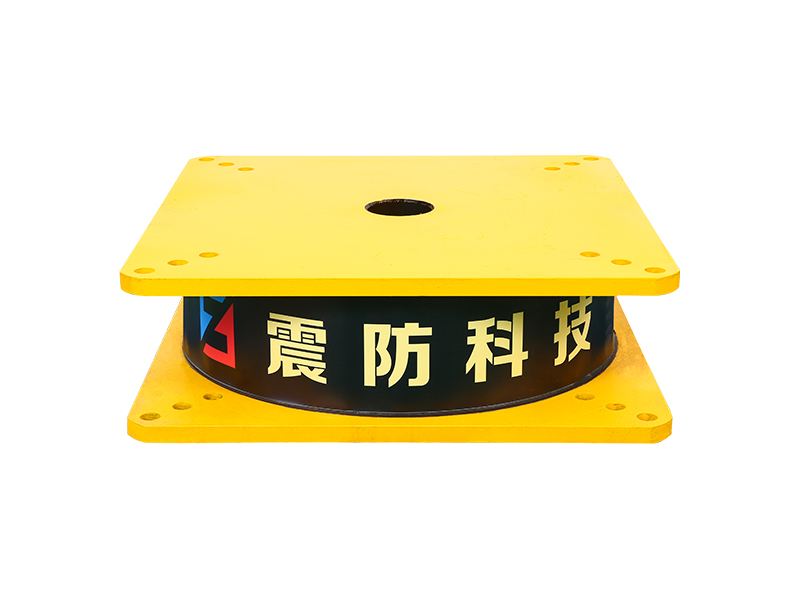
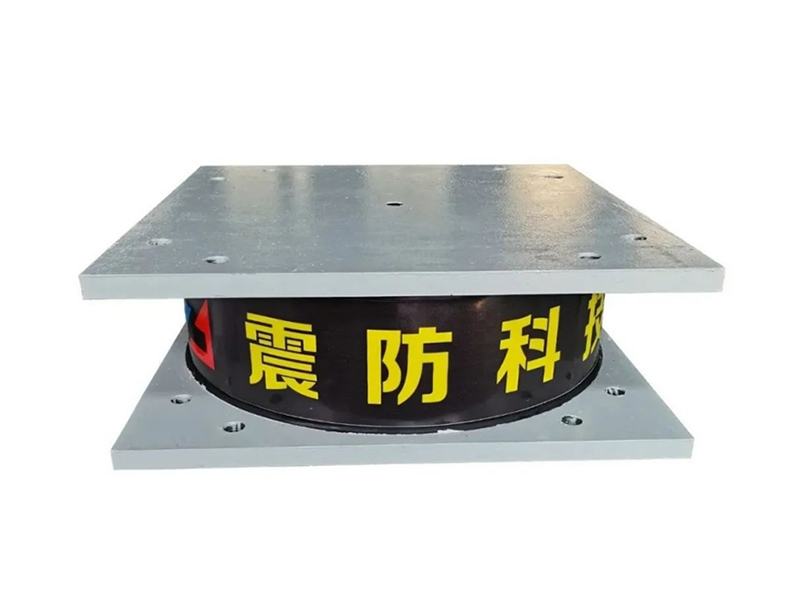
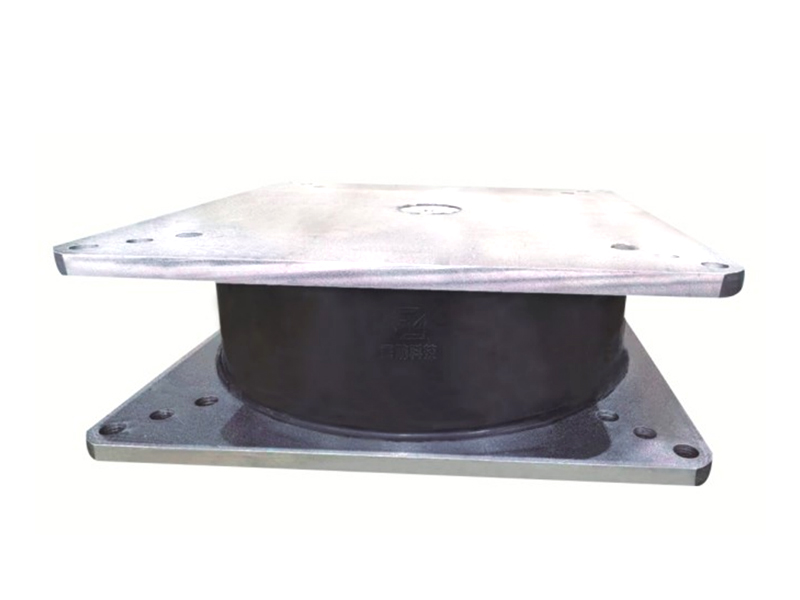

The company has been adhering to the corporate tenet of "quality first, customer first", and sincerely welcomes domestic and foreign customers to visit and guide.
GET A QUOTE
Add: No. 359 Guangming West Road, Sanmen County, Taizhou City, Zhejiang Province, China
International Trade Manager: Madison
Tel/Whatsapp:+86-17857335842
Copyright © Zhejiang Earthquake Prevention Technology Co., Ltd. All Rights Reserved.
