

 English
 日本語
日本語 русский
 简体中文
简体中文
The company has been adhering to the corporate tenet of "quality first, customer first", and sincerely welcomes domestic and foreign customers to visit and guide.
GET A QUOTE
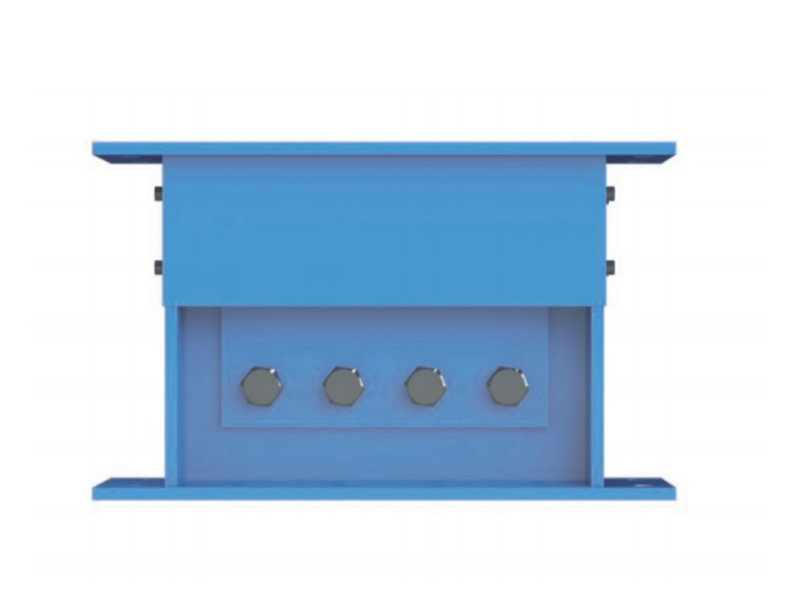
The buckling restrained brace has gained recognition as a reliable component within the broader category of seismic isolation products used in building construction. Unlike conventional steel braces that may buckle under compressive loads during earthquake events, a buckling restrained brace remains stable because its steel core is encased in a mortar-filled steel tube. Structural engineers specify the buckling restrained brace as part of seismic isolation products packages for hospitals, schools, and government buildings. The predictable energy dissipation of a buckling restrained brace helps design teams meet building code requirements for earthquake resistance.
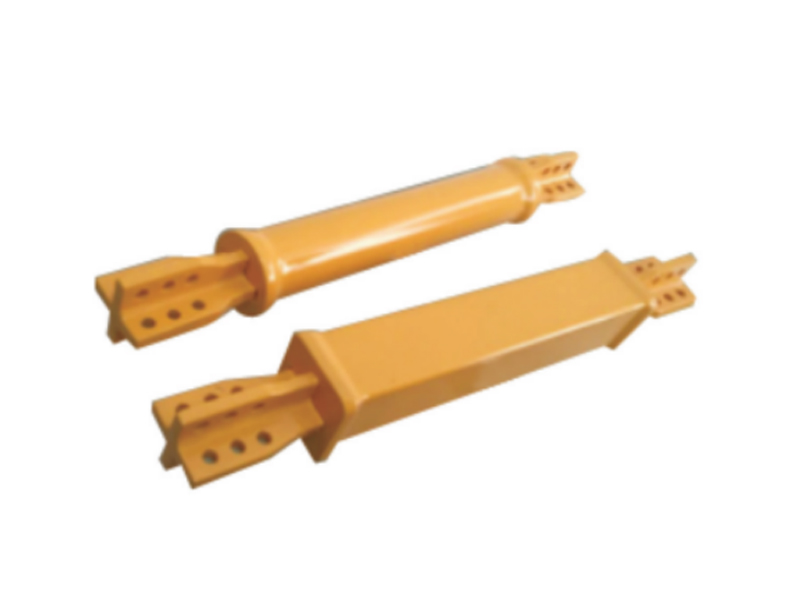
Construction of a buckling restrained brace includes a steel core plate, a debonding layer, and a confining casing. The steel core of the buckling restrained brace carries both tension and compression loads, while the surrounding casing prevents global buckling under compression. A mortar or concrete fill transfers lateral forces from the steel core to the casing of the buckling restrained brace. The debonding gap within the buckling restrained brace prevents shear transfer between the core and the fill, allowing the core to slide freely until yielding begins. Each buckling restrained brace undergoes factory testing to verify yield force and deformation capacity before shipment.
Integration of the buckling restrained brace with other seismic isolation products affects overall building response during ground motion. A buckling restrained brace works alongside base isolators, viscous dampers, and other seismic isolation products to form a complete protection system. Building frames equipped with buckling restrained brace devices distribute seismic forces more evenly compared to frames with conventional bracing. The yielding sequence of a buckling restrained brace occurs in the core ends, then propagates toward the center as displacement increases. Engineers model the nonlinear behavior of each buckling restrained brace in the overall seismic isolation products assembly.
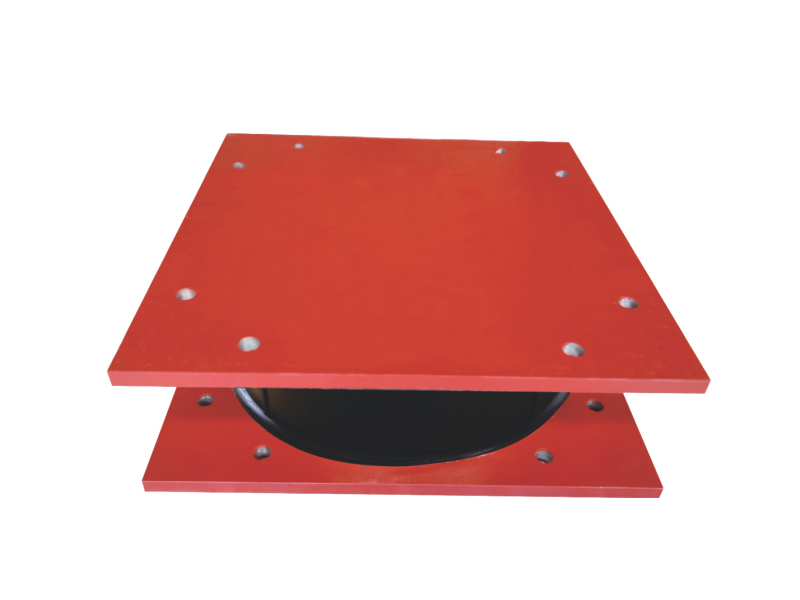
Performance characteristics of a buckling restrained brace include stable hysteresis loops and high energy dissipation per cycle. Laboratory testing of a buckling restrained brace shows consistent force-displacement behavior across multiple cycles at the expected earthquake displacement. A buckling restrained brace maintains its energy dissipation capacity after several large deformations, unlike some other seismic isolation products that degrade with repeated loading. The cumulative inelastic deformation of a buckling restrained brace can exceed many times its yield displacement before fracture occurs. Quality control checks on each buckling restrained brace include measuring core dimensions, confirming casing concentricity, and verifying grout strength.
Applications of buckling restrained brace technology span both new construction and retrofit projects. A new steel frame designed with buckling restrained brace devices requires fewer bracing members than a conventional concentrically braced frame. Retrofitting an existing concrete building with buckling restrained brace systems can increase seismic capacity without adding significant weight to the foundation. The placement of buckling restrained brace units within a structural grid affects drift distribution and floor acceleration levels. Architects accommodate the buckling restrained brace within partition walls or exterior cladding, as the device may require access for periodic inspection after major seismic events.
The buckling restrained brace will likely see expanded use as seismic design criteria evolve. Reduced manufacturing costs from automated welding and grouting processes make the buckling restrained brace accessible for smaller projects. Research into all-steel buckling restrained brace designs eliminates mortar fill, simplifying quality assurance procedures. For structural engineers seeking predictable seismic performance, the buckling restrained brace offers a tested solution within the family of seismic isolation products.

The company has been adhering to the corporate tenet of "quality first, customer first", and sincerely welcomes domestic and foreign customers to visit and guide.
GET A QUOTE
Add: No. 359 Guangming West Road, Sanmen County, Taizhou City, Zhejiang Province, China
International Trade Manager: Madison
Tel/Whatsapp:+86-17857335842
Copyright © Zhejiang Earthquake Prevention Technology Co., Ltd. All Rights Reserved.
