

 English
 日本語
日本語 русский
 简体中文
简体中文
The company has been adhering to the corporate tenet of "quality first, customer first", and sincerely welcomes domestic and foreign customers to visit and guide.
GET A QUOTE
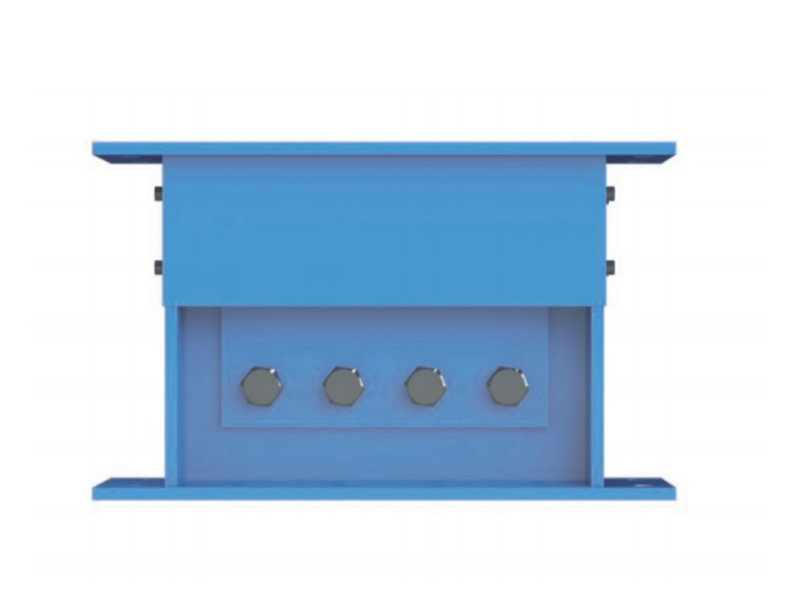
A pure metal damper dissipates energy well but does not return to its original position on its own once the shaking stops, which leaves residual structural deformation for engineers to address separately. A metal composite damper addresses this specific gap by combining a lead-viscoelastic damper with a friction damper, using viscoelastic material that both consumes energy during an earthquake and contributes a reset function that a metal-only design lacks. Understanding how these combined mechanisms interact helps buyers decide whether a metal composite damper is worth its added complexity for a given project, or whether a simpler single-mechanism device meets the actual performance requirement.
A standard metal damper achieves damping through plastic deformation of low-yield-point steel, which is simple, reliable, and largely unaffected by temperature, but plastic deformation is inherently permanent rather than self-correcting. A metal composite damper layers a friction-based mechanism and lead-viscoelastic material onto this same basic principle, adding energy dissipation pathways that behave differently under load while introducing the self-centering behavior that pure plastic deformation cannot provide on its own. Buyers should understand that this is a genuine combination of mechanisms rather than simply a metal damper with a different name, since the added components change both the performance profile and the post-earthquake behavior of the device.
The reset function in a metal composite damper matters especially in the period immediately after an earthquake, when a building's residual deformation determines how quickly it can be reoccupied and how much repair work is needed before normal use resumes. A device that dissipates energy well but leaves the structure permanently offset from its original position creates a different post-event scenario than one that helps the structure return closer to its pre-earthquake alignment. Buyers specifying dampers for buildings where rapid post-earthquake reoccupancy matters, such as hospitals or emergency response facilities, should weigh this reset capability more heavily than they would for structures where downtime after a major event is less critical.
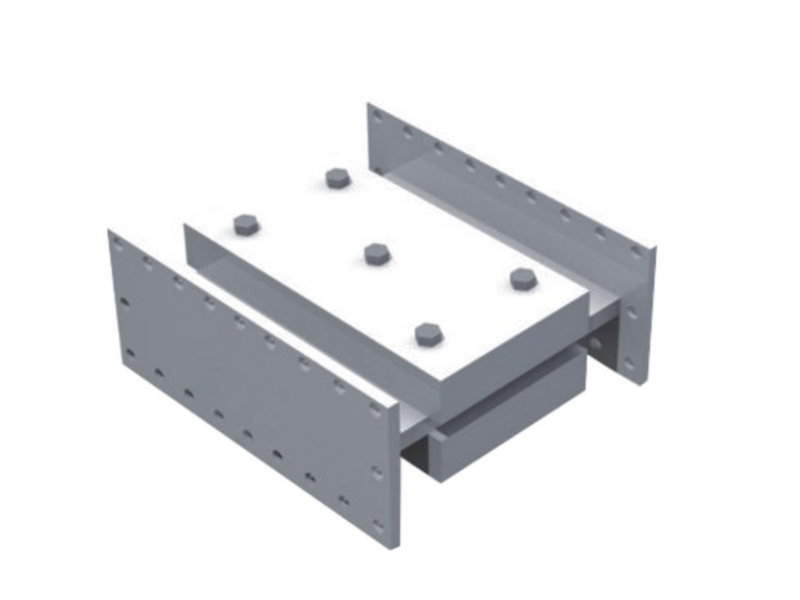
The friction damper component inside a metal composite damper typically consists of a middle steel plate, two outer steel plates, and a friction material positioned between them, generating resistance through sliding contact rather than through material deformation alone. This friction-based resistance activates alongside the lead-viscoelastic material's own damping behavior, giving the combined device more than one pathway for dissipating seismic energy simultaneously. Buyers should ask suppliers how these two mechanisms are tuned relative to each other in a specific product, since a poorly balanced combination can mean one mechanism dominates while the other contributes only marginally to overall performance. Requesting test data that isolates each mechanism's individual contribution, rather than only a combined performance figure, helps buyers understand whether they are paying for genuinely balanced engineering or for a friction component that carries the bulk of the practical work while the lead-viscoelastic material contributes comparatively little.
|
Characteristic |
Metal Damper Alone |
Metal Composite Damper |
|
Primary mechanism |
Plastic deformation of steel |
Combined friction and lead-viscoelastic action |
|
Post-earthquake positioning |
Permanent deformation likely |
Partial self-centering through reset function |
|
Temperature sensitivity |
Low |
Moderate, viscoelastic component adds some sensitivity |
|
Mechanical complexity |
Simpler, single mechanism |
Higher, multiple mechanisms working together |
|
Suited for |
Cost-sensitive projects, simple retrofit |
Facilities prioritizing rapid post-event reoccupancy |
Because a metal composite damper incorporates viscoelastic material alongside its metal and friction components, buyers should ask specifically how the device performs across the temperature range expected at their project site, since viscoelastic materials generally show more temperature-dependent behavior than steel-only mechanisms. A pure metal damper's performance stays largely unaffected by temperature, which is one advantage buyers give up in exchange for the lead-viscoelastic damper component's added reset capability. Weighing this trade-off against a specific project's climate and reoccupancy priorities helps buyers determine whether the added complexity of a metal composite damper delivers enough practical benefit to justify it over a simpler metal-only device.

The company has been adhering to the corporate tenet of "quality first, customer first", and sincerely welcomes domestic and foreign customers to visit and guide.
GET A QUOTE
Add: No. 359 Guangming West Road, Sanmen County, Taizhou City, Zhejiang Province, China
International Trade Manager: Madison
Tel/Whatsapp:+86-17857335842
Copyright © Zhejiang Earthquake Prevention Technology Co., Ltd. All Rights Reserved.
