

 English
 日本語
日本語 русский
 简体中文
简体中文
The company has been adhering to the corporate tenet of "quality first, customer first", and sincerely welcomes domestic and foreign customers to visit and guide.
GET A QUOTE
Structural engineers specifying seismic protection systems keep returning to the same design question: what actually lets a buckling restrained brace yield repeatedly under both tension and compression without the sudden strength loss a conventional steel brace suffers once it buckles under compressive load? Fabricators supplying this category increasingly find that core steel selection, casing design, and the unbonding layer between them determine performance more than the brace's total size or rated capacity alone.
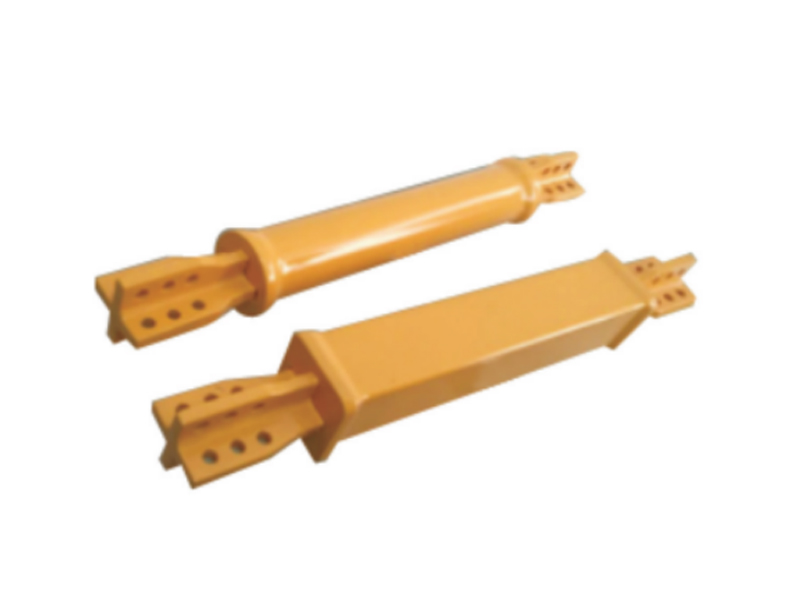
A conventional steel brace performs well under tension but loses strength abruptly once compressive load pushes it past its buckling threshold, a failure mode that concentrates damage at a single point and limits how much energy the brace absorbs during a seismic event. A buckling restrained brace solves this by encasing a steel core inside a rigid casing that physically prevents lateral buckling, allowing the core to yield in compression nearly as effectively as it yields in tension, which dramatically increases the energy a single brace can dissipate during repeated cyclic loading.
Core steel grade matters considerably here, since low-yield-point steel gives engineers more predictable, stable hysteretic behavior across repeated loading cycles compared to standard structural steel grades. Fabricators producing a buckling restrained brace for seismic retrofit programs increasingly specify low-yield steel cores precisely because this material yields at a lower, more consistent stress level, giving structural engineers tighter control over how a building's lateral system responds during an earthquake.
|
Design Element |
Function |
Common Specification |
|
Steel core |
Yields under tension and compression |
Low-yield-point steel (LYP225 or similar) |
|
Outer casing |
Restrains the core against buckling |
Steel tube filled with mortar or concrete |
|
Unbonding layer |
Prevents core-casing friction bond |
Debonding material or air gap |
|
Connection design |
Transfers load to structural frame |
Bolted or pinned end connections |
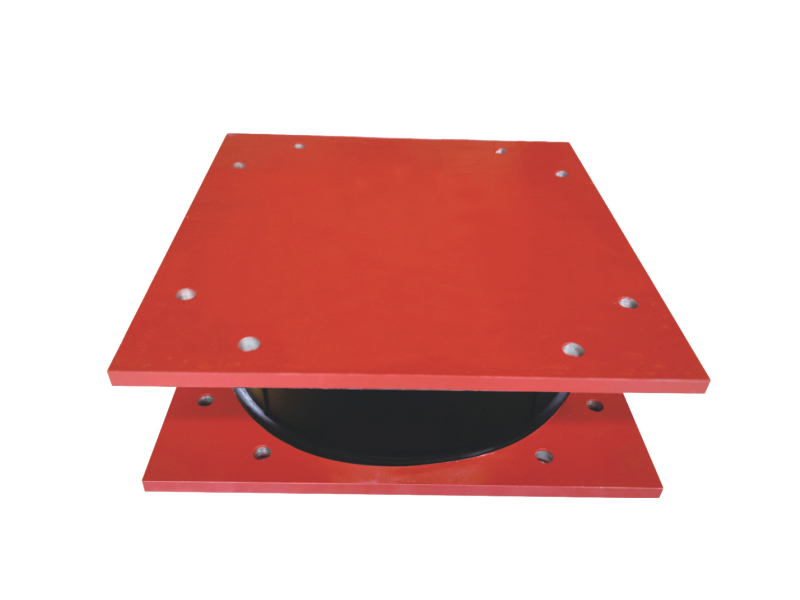
The outer casing on this system does the mechanical work of preventing lateral core buckling, typically built as a steel tube filled with mortar or concrete grout that surrounds the core along its full length. This casing carries none of the axial load itself; instead, it exists purely to resist the lateral forces the core generates as it tries to buckle under compression, so the casing-to-core interface deserves as much engineering attention as the core material itself.
An unbonding layer between the steel core and the surrounding mortar prevents the core from bonding to the casing material, since a bonded interface would let axial load transfer into the casing and defeat the entire design intent. Manufacturers typically apply a debonding coating, a thin air gap, or an unbonding sleeve wrapped around the core to maintain this separation, and buyers qualifying a new fabricator increasingly request documentation showing how this unbonding layer holds up across repeated cyclic displacement without degrading.
Buckling restrained braces undergo qualification testing well beyond what a standard structural steel member requires, since a seismic brace intended to dissipate earthquake energy needs verified performance across many loading cycles at increasing displacement amplitudes rather than a single static load test. AISC 341 provisions in the United States establish testing protocols requiring braces to complete a prescribed number of cycles at various ductility levels without fracturing or losing more than a specified percentage of their load-carrying capacity.
Full-scale prototype testing remains standard practice for new brace designs before a manufacturer applies the qualification results to a broader product line built on similar core and casing dimensions.
Manufacturing tolerance on core-to-casing clearance affects performance more directly than buyers unfamiliar with this category often expect, since a gap too tight restricts the core's ability to expand slightly under compression, while a gap too loose lets the core develop a small buckling wave before the casing fully engages. Fabricators producing this component increasingly document this clearance dimension as a controlled manufacturing tolerance rather than treating it as a minor assembly detail.
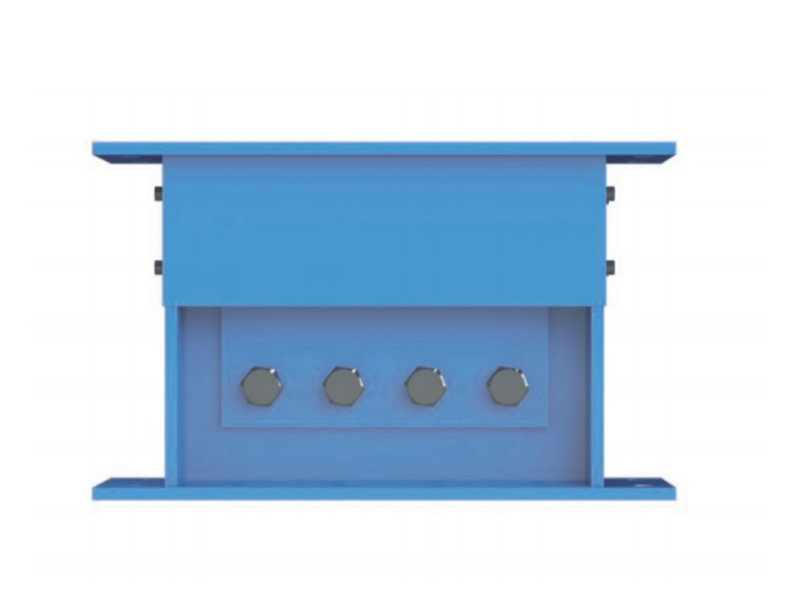
Connection design at the brace ends carries equal weight, since the pin or bolted connection transferring load into the surrounding structural frame needs to match the steel core brace's rated capacity without introducing a weaker link elsewhere in the load path.
Seismic Bearing, working within this category, documents core steel certification, casing fabrication tolerances, and cyclic test performance for its buckling restrained

The company has been adhering to the corporate tenet of "quality first, customer first", and sincerely welcomes domestic and foreign customers to visit and guide.
GET A QUOTE
Add: No. 359 Guangming West Road, Sanmen County, Taizhou City, Zhejiang Province, China
International Trade Manager: Madison
Tel/Whatsapp:+86-17857335842
Copyright © Zhejiang Earthquake Prevention Technology Co., Ltd. All Rights Reserved.
