

 English
 日本語
日本語 русский
 简体中文
简体中文
The company has been adhering to the corporate tenet of "quality first, customer first", and sincerely welcomes domestic and foreign customers to visit and guide.
GET A QUOTE
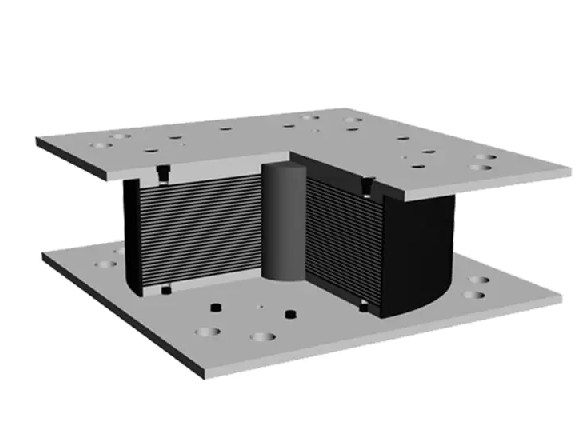
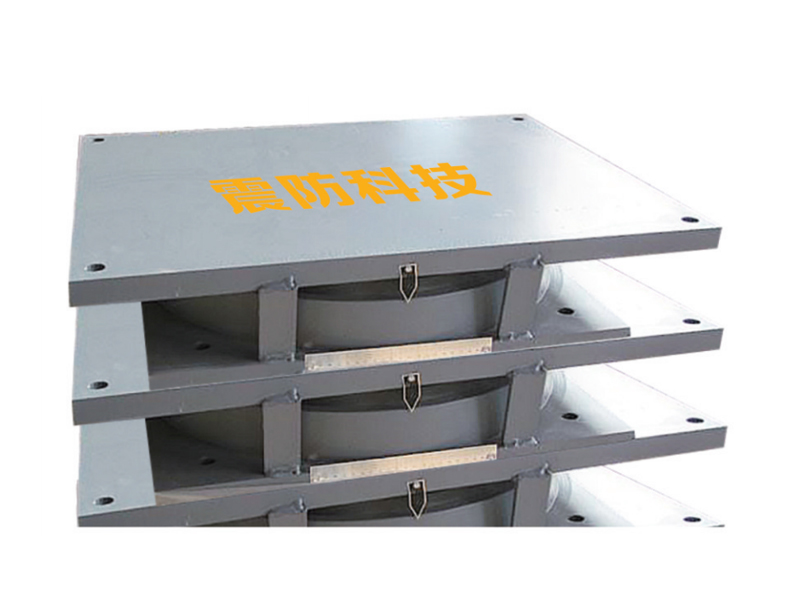
A linear rubber bearing is often discussed in terms of seismic isolation performance, but engineers on actual projects usually pay attention to another detail much earlier — how the bearing behaves under permanent building weight.
Before an earthquake ever occurs, the bearing may spend years supporting a constant vertical load. During that time, the structure is already influencing how the rubber layers deform, recover, and distribute stress internally.
This is one reason why two buildings using the same isolation concept may show different long-term behavior even when located in similar seismic regions.
Actually, some of the challenges associated with seismic isolation begin long before seismic activity enters the picture.
Long-Term Compression Is Different From Earthquake Movement
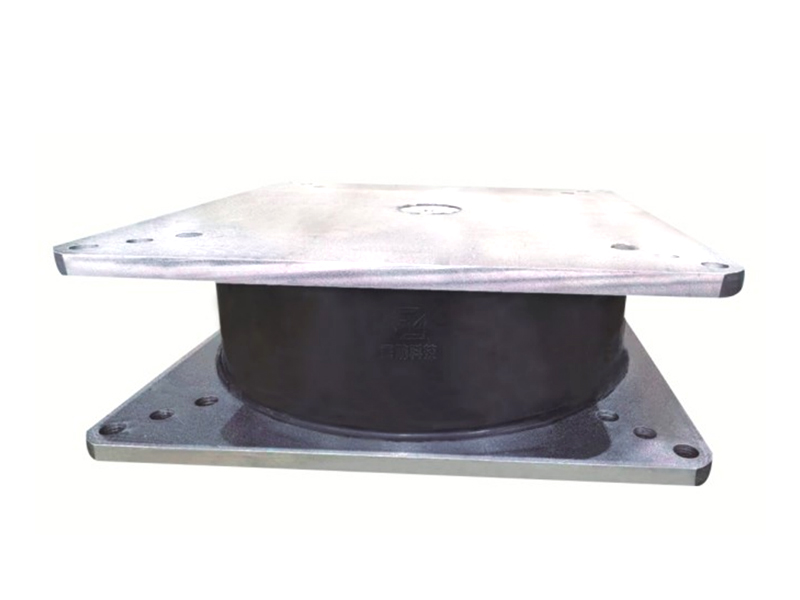
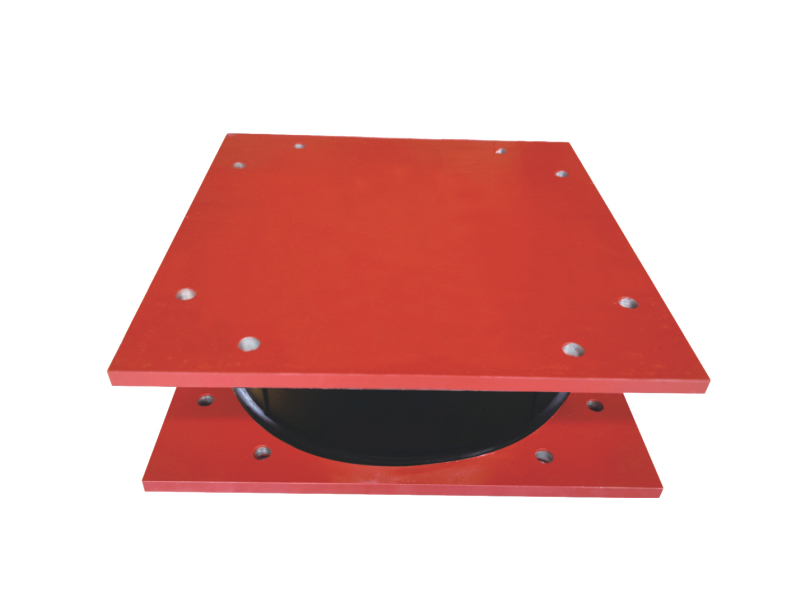
A linear rubber bearing is designed to accommodate horizontal displacement while supporting vertical loads. Most discussions focus on what happens during seismic events, yet the bearing spends the vast majority of its service life carrying the building's weight.
Over time, rubber experiences a phenomenon known as creep. Under continuous compression, small deformation can gradually accumulate even when the applied load remains unchanged.
For low-rise structures, the effect may be relatively modest. In larger facilities, however, engineers often evaluate long-term compression behavior carefully because even small dimensional changes can influence alignment across the isolation system.
Actually, permanent load conditions often receive as much attention during design reviews as seismic performance calculations.
Weight Distribution Is Rarely Nice
On paper, structural loads may appear evenly distributed.
In reality, a linear rubber bearing rarely experiences exactly the same loading condition as every other bearing beneath the building. Mechanical rooms, elevator cores, equipment areas, and architectural layouts can all create localized load differences.
Because of this, some bearings may experience higher compression than neighboring units despite being part of the same structure.
Experienced engineers often review load maps carefully during the design stage to identify areas where bearing behavior may differ over time. The goal is not only to satisfy strength requirements but also to maintain predictable structural movement throughout the building's service life.
Temperature Can Change How Rubber Responds
A linear rubber bearing does not exist in a perfectly controlled environment.
Seasonal temperature changes affect both the rubber material and the surrounding structure. While the changes may appear small, temperature influences rubber stiffness and recovery characteristics.
In regions with significant seasonal variation, engineers sometimes observe subtle differences between summer and winter behavior. The bearing remains functional, but its response to movement and loading may not be identical throughout the year.
Actually, environmental conditions often become more important as building service life extends over decades rather than years.
Small Movements Happen Every Day
Many people associate a linear rubber bearing exclusively with earthquakes.
However, buildings move more frequently than many occupants realize. Thermal expansion, wind loads, equipment vibration, and minor structural adjustments all generate movement within the structure.
These daily movements are much smaller than seismic displacements, but they occur repeatedly throughout the life of the building.
Over time, engineers study how the bearing responds not only to fewer events but also to countless ordinary movement cycles that occur during normal operation.
Actually, routine building movement provides valuable information about how the isolation system is performing long before a major seismic event occurs.
Installation Accuracy Influences Future Performance
Even a well-designed linear rubber bearing can be affected by installation conditions.
If bearing elevations vary slightly during construction, load distribution may change once the structure is completed. The differences can be small enough to avoid immediate concern while still influencing long-term stress patterns within the isolation layer.
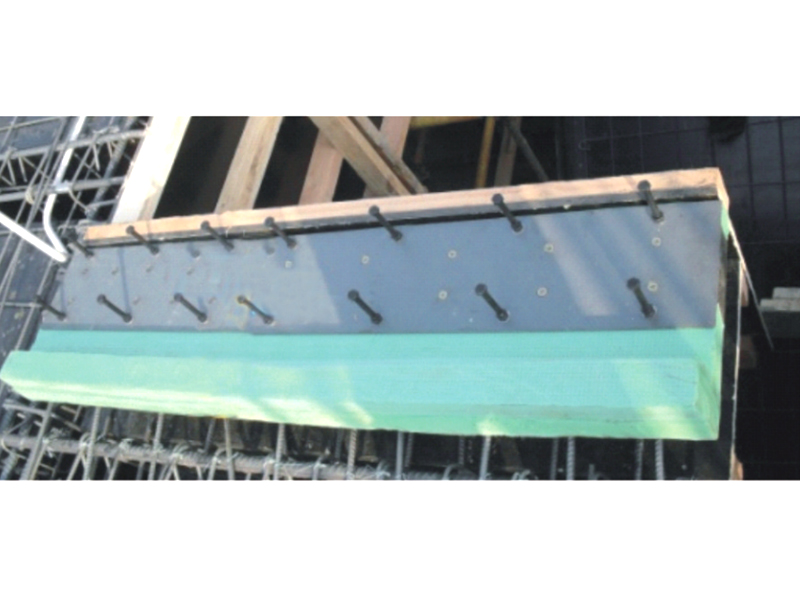
For this reason, construction teams often spend considerable effort checking alignment, positioning, and support conditions before the building load is fully transferred onto the bearings.
Actually, many isolation specialists view installation quality as closely connected to long-term performance rather than as a separate construction task.
Isolation Systems Spend More Time Supporting Than Moving
To the public, a linear rubber bearing is often associated with dramatic images of buildings moving safely during earthquakes.
Inside engineering practice, however, much of the discussion revolves around what happens during the years between those events. Permanent building weight, environmental changes, daily structural movement, and load distribution all influence how the bearing performs throughout its service life.
The difficult part is not allowing movement during an earthquake.
It is maintaining predictable behavior during the decades when the building is simply standing still and carrying its own weight.

The company has been adhering to the corporate tenet of "quality first, customer first", and sincerely welcomes domestic and foreign customers to visit and guide.
GET A QUOTE
Add: No. 359 Guangming West Road, Sanmen County, Taizhou City, Zhejiang Province, China
International Trade Manager: Madison
Tel/Whatsapp:+86-17857335842
Copyright © Zhejiang Earthquake Prevention Technology Co., Ltd. All Rights Reserved.
